The process of becoming a licensed Professional Engineer (P.Eng) in Canada has always been seen as a structured but demanding pathway, particularly for internationally trained engineers. However, recent changes to the licensing requirements in Ontario have significantly reshaped this process.
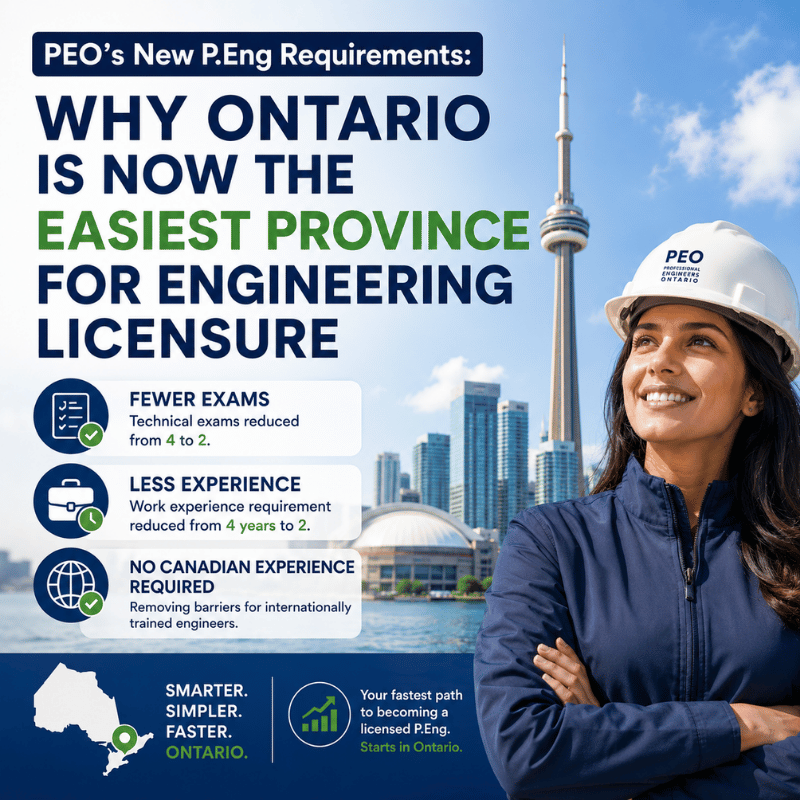
The Professional Engineers Ontario (PEO) framework has been updated in several key areas, reducing both academic and practical barriers to licensure. These changes include a reduction in the number of required technical exams, a shortened work experience requirement, and the removal of the Canadian experience requirement.
Together, these updates represent a major shift in how engineering licensure is approached in Ontario, making the province’s pathway more streamlined and accessible than before. This blog outlines exactly what has changed and why these updates are important for engineers considering licensure in Canada.
One of the most significant changes to the P.Eng licensing process in Ontario is the reduction in technical examination requirements. Previously, applicants who were assigned confirmatory examinations as part of their academic assessment were often required to complete up to four technical exams to demonstrate that their engineering knowledge met Canadian standards.
Under the new framework, this requirement has been reduced to just two technical examinations. This change significantly lowers the academic burden on applicants while still ensuring that professional standards are maintained.
For internationally educated engineers, the impact is substantial. Fewer exams mean less time spent preparing and studying, lower examination costs, and a faster route toward meeting licensing requirements. Instead of dedicating months or even years to completing multiple technical assessments, applicants can now focus on advancing their careers and completing the remaining steps toward licensure.
By reducing the number of required technical exams from four to two, Ontario has made the P.Eng pathway more accessible and efficient without compromising the profession’s commitment to competence and public safety.
If you are not sure what technical exams are, you can read all about them in our other blog here.
Another major update to Ontario’s P.Eng licensing process is the reduction in the required engineering work experience. Previously, applicants were expected to demonstrate a minimum of four years of acceptable engineering experience before becoming eligible for licensure.
Under the updated requirements, this has now been reduced to just two years of relevant engineering experience. This change significantly shortens the overall pathway to becoming a licensed Professional Engineer in Ontario.
For applicants, this means they can qualify for licensure much earlier in their careers. Early-career engineers no longer need to wait several additional years before applying, allowing them to progress professionally at a faster pace. It also reduces the financial and time-related barriers associated with accumulating lengthy post-graduate experience.
Overall, this adjustment makes the Ontario P.Eng pathway more efficient and responsive to modern workforce needs, while still ensuring that applicants demonstrate sufficient practical engineering competence before licensure.
With the recent updates to its licensing framework, Ontario has positioned itself as one of the most accessible pathways in Canada for obtaining a P.Eng designation. The combination of reduced technical exams, a shorter work experience requirement, and the removal of Canadian experience requirements has significantly lowered the overall barriers to entry.
Compared to previous standards, applicants can now move through the licensing process more quickly and with fewer administrative and practical hurdles. Internationally trained engineers, in particular, benefit from these changes, as they are no longer required to first accumulate Canadian-specific experience before becoming eligible.
When viewed together, these reforms create a more streamlined and efficient route to licensure. The reduced academic burden, shorter experience timeline, and elimination of location-based experience requirements all contribute to making Ontario a more direct and predictable pathway for engineers seeking P.Eng status.
As a result, Ontario is increasingly seen as the most straightforward option in Canada for qualified engineers aiming to obtain their professional designation.
For internationally trained engineers, these changes significantly reduce the traditional barriers that were often associated with obtaining a P.Eng licence in Ontario. Previously, many applicants faced challenges not only in meeting technical examination requirements but also in accumulating the required length of work experience and demonstrating Canadian-specific engineering exposure.
With the new framework, the pathway is more direct and less dependent on location-based experience. The reduction in technical exams from four to two means fewer academic assessments to complete, while the reduced work experience requirement shortens the overall timeline to eligibility. Most importantly, the removal of the Canadian experience requirement eliminates one of the most common obstacles for engineers who have built their careers outside of Canada.
Together, these changes make it more feasible for internationally trained professionals to transition into licensed engineering roles in Ontario without needing to significantly restart or restructure their careers. It creates a more transparent and accessible pathway, allowing qualified engineers to focus on demonstrating their competence rather than navigating additional regional requirements.