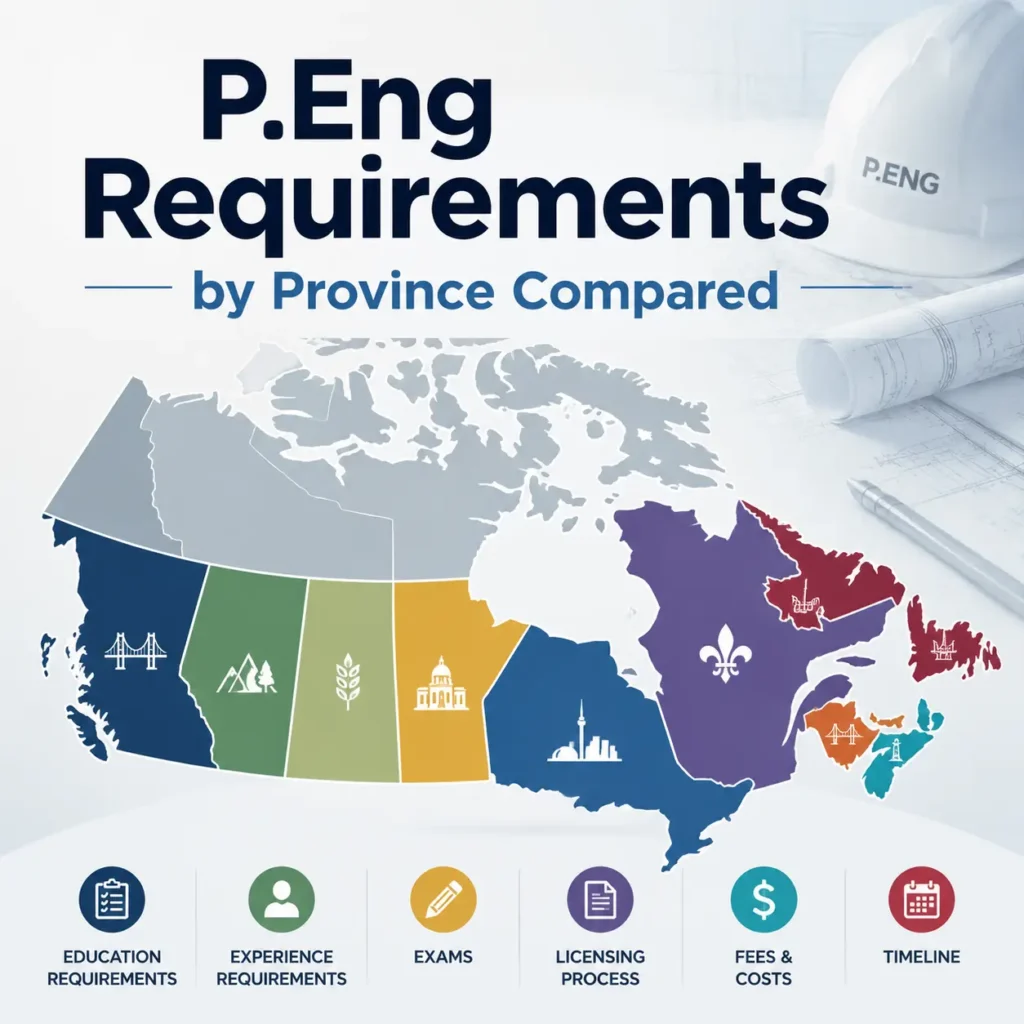
Navigating the pathway to becoming a licensed Professional Engineer (P.Eng) in Canada can often seem daunting, especially when considering the different P.Eng requirements by province. Each province has its own regulatory body with unique stipulations regarding experience length, examinations, and fees. In this blog post, we will provide a comprehensive side-by-side comparison of P.Eng requirements across all twelve engineering regulators in Canada, ensuring you have the information you need to guide your journey to obtaining your P.Eng license.
The role of a Professional Engineer (P.Eng) is crucial in maintaining public trust and safety in engineering practices. As the engineering landscape evolves, understanding the P.Eng requirements by province is vital for aspiring engineers. Each province has a specific set of regulations managed by its engineering regulatory body. These differences can impact the licensing timeline and the process itself.
It’s essential to note that while we provide a robust comparison, it’s always prudent to verify with the regulator in your specific province as requirements might change or have exceptions.
Below is a detailed comparison of the P.Eng requirements by province, including critical factors such as experience requirements, the necessity of the National Professional Practice Examination (NPPE), and related fees.
| Regulator | Province | Experience Length | NPPE Required | Notes |
|---|---|---|---|---|
| Engineers Canada | Alberta | 4 years | Yes | Must complete webinars for exam prep. |
| APEGA | Alberta | 4 years | Yes | Consideration for language proficiency deadlines. |
| Engineers Nova Scotia | Nova Scotia | 4 years | Yes | Recent changes in application processing times. |
| APEGNL | Newfoundland | 4 years | Yes | Post-secondary institution must be from an accredited program. |
| APEGBC | British Columbia | 4 years | Yes | Different fees for residents and non-residents. |
| OIQ | Quebec | 4 years | Yes | Proficiency in French is crucial for practice. |
| PEGNL | Newfoundland | 4 years | Yes | Limited scope for international experience. |
| APEQ | Quebec | 4 years | Yes | Exam can be waived for certain experience levels. |
| APEGS | Saskatchewan | 4 years | Yes | Canadian citizen or permanent resident requirement. |
| APEM | Manitoba | 4 years | Yes | Applicants should be aware of sponsorship details. |
| APEO | Ontario | 4 years | Yes | Engage in public safety measures and community work. |
| PEO | Ontario | 4 years | Yes | Multiple alternative pathways available for licensing. |
*Disclaimer: All information in this table is subject to change. Verify details with the respective provincial regulator.*
One of the critical milestones in obtaining your P.Eng license in Canada is passing the National Professional Practice Examination (NPPE). This exam assesses candidates’ understanding of the legal and ethical obligations as engineers in Canada. In almost every province, passing this exam is mandatory, which indicates a universal standard for engineering professions.
Understanding the NPPE not only prepares engineers for their licensing exam but also enhances their ethical and professional responsibilities once licensed. While specifics may differ by province, every aspiring engineer must prepare adequately for this component.
Every regulatory body charges various fees associated with application, examination, and membership. These costs can add up, so it’s essential to understand the financial aspect of the licensing process. Moreover, the timelines for processing applications can vary, impacting how soon you may receive your P.Eng designation.
Here are some practical takeaways regarding costs:
The pathway to becoming a licensed P.Eng is defined by various provincial regulations that must be navigated with precise understanding and strategic planning. Being equipped with knowledge regarding the P.Eng requirements by province can significantly streamline your journey, ensuring you meet all regulatory needs without unexpected hurdles.
For recruiters and HR professionals, understanding these nuances not only helps in hiring qualified engineering talent but also ensures your organization remains compliant with industry standards. Embrace the diversity and requirements of each province to optimize your talent acquisition strategy.
If you are looking for further assistance or have questions about the P.Eng application process, our team at Ontario Polytechnic is here to help. Our services can guide you through the complex landscape of engineering licensing, ensuring you’re prepared every step of the way.